
Technical Specifications
Lab-confirmed batch parameters
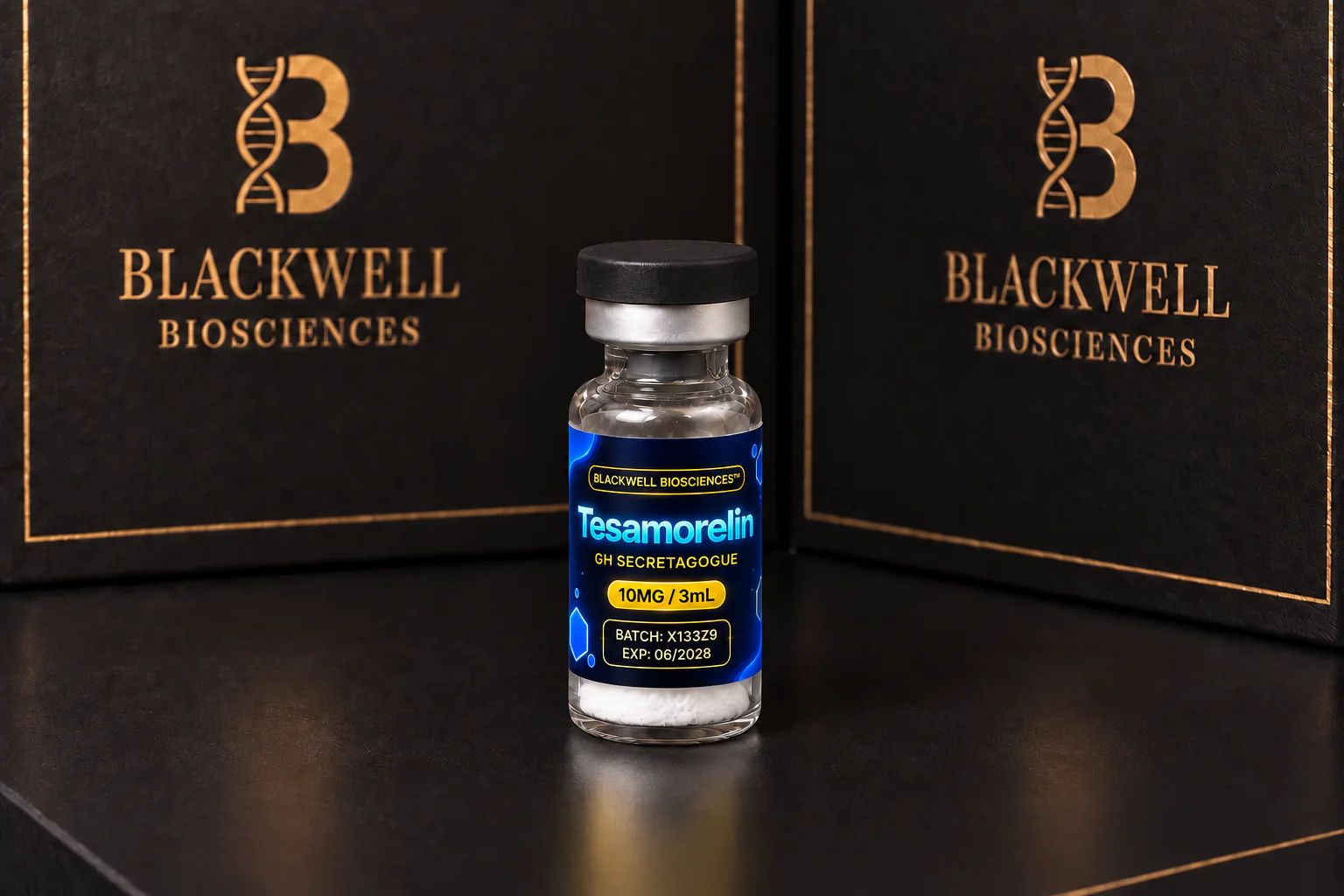
Size10mg
FormLyophilized powder
StorageFollow the storage conditions and expiry information on the supplied container. Keep the original lot identification with the material. Contact support if the label is missing or unclear.
Molecular FormulaC₂₂₁H₃₆₆N₇₂O₆₇S
Molecular Weight5135.9 g/mol
SequenceTrans-3-hexenoic acid-modified GHRH(1-44)-NH₂
About Tesamorelin
Research compound overview
Tesamorelin is supplied as lyophilized powder in the listed quantity: 10mg. Available analytical documents are linked on this page. Confirm that the report matches the lot supplied and review the methods and results in the original document. For laboratory research use only. Not for human or veterinary use.
Frequently Asked Questions
Common research and ordering questions
What quantity and form are supplied?
10mg; lyophilized powder. Refer to the container label for lot-specific details.
Where can I find batch documentation?
Available analytical documents are linked on this page. Confirm that the report matches the lot supplied and review the methods and results in the original document.
What is the intended use?
For laboratory research use only. Not for human or veterinary use. No personal administration instructions are provided.
Certificate of Analysis
Third-party verified · September 20, 2026
HPLC Verified · MS Confirmed
Tesamorelin 10 mg · Batch X133Z9
APA-2026-A2D3D2 · Issued September 20, 2026
Reported Purity
99.3%
Batch
X133Z9
Labeled Quantity
10 mg
Testing Method
HPLC / MS
Lab Type
Third-Party
Published
September 20, 2026
Match the batch and labeled quantity on your vial to this report. For a different lot, contact support through the product page.
Scan to access this page on any device. QR code links directly to this product's verification page.