PeptideCOA VerifiedResearch Use Only

Dihexa

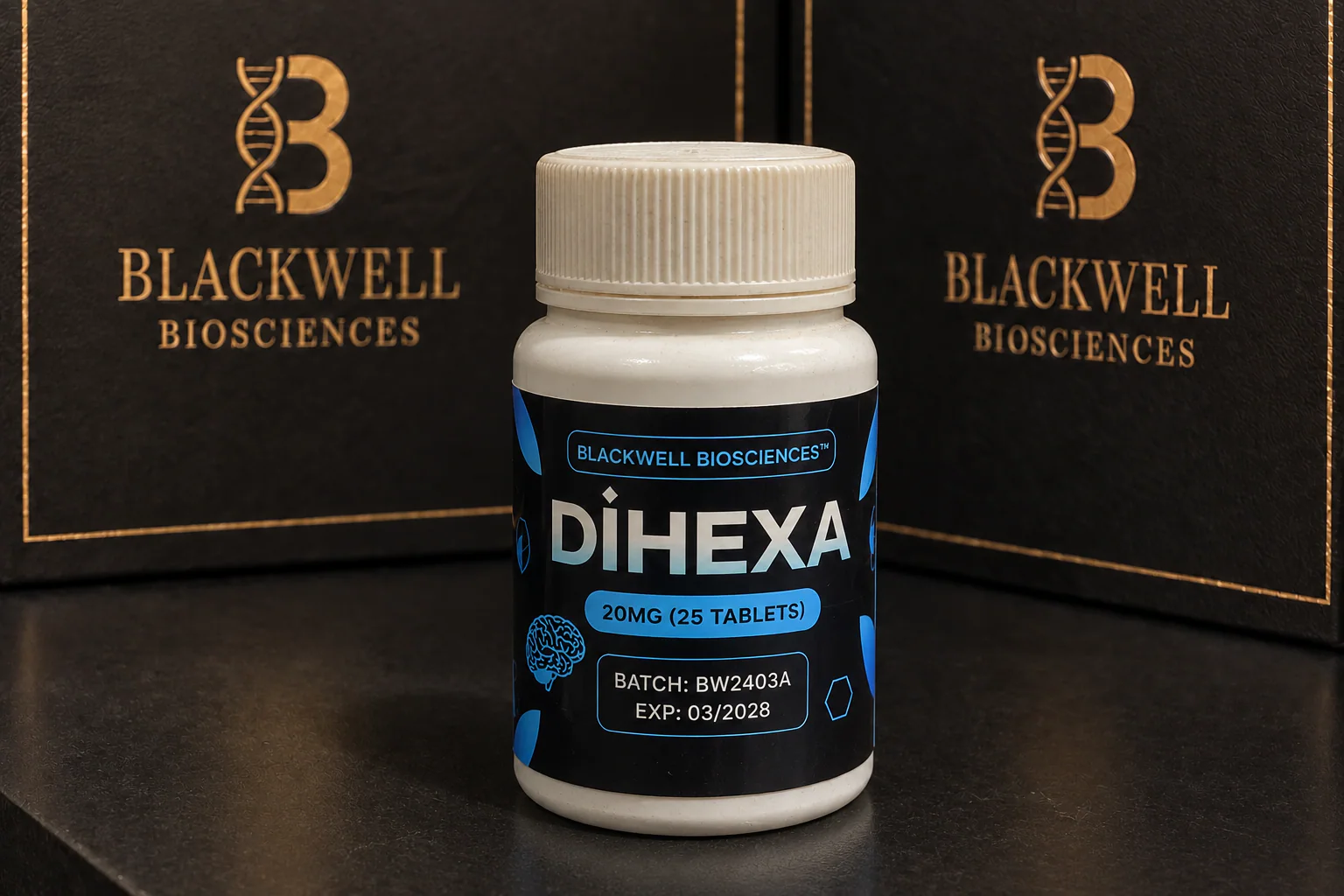
Dihexa is a peptidomimetic compound studied for its role in HGF/c-Met pathway activation and dendritic spine formation in synaptic connectivity research models. Published research examines its effects on hippocampal synaptic density in preclinical settings. 99% purity, batch-verified. For research use only.

≥99%Purity
20 mg tabletsSize
$299.99Price
4.940 Reviews
Order Dihexa
Dihexa vial
Technical Specifications
Lab-confirmed batch parameters
Purity≥99%
Size20 mg tablets
FormTablets
StorageStore at room temperature. Protect from moisture.
Molecular FormulaC₂₁H₃₃N₃O₄
Molecular Weight507.63 g/mol
About Dihexa
Research compound overview

Dihexa is a small peptidomimetic compound derived from angiotensin IV, studied for its activity as a potent agonist of the HGF/c-Met signaling system — a pathway researchers have linked to dendritic spine formation and synaptic connectivity in neural tissue models. Published research has examined Dihexa's role in activating hepatocyte growth factor (HGF) signaling, which researchers have associated with new synapse formation and plasticity in hippocampal tissue models. Studies have documented its effects on dendritic spine density and hippocampal connectivity in preclinical research settings. The c-Met/HGF pathway has attracted significant research interest in the context of neural plasticity and synaptic architecture. Dihexa's documented activity in this pathway has made it a subject of investigation for researchers examining neuroplasticity mechanisms, memory function research, and neurodegenerative disease models. Available in tablet form for research use. For research use only.

Research Applications
Areas of scientific investigation
Cognitive EnhancementSynaptogenesisNeuroplasticityMemory Research
Key Research Findings
Reported in peer-reviewed literature
10M× BDNF Potency
Unprecedented synaptogenic effect
Dendritic Growth
Physical synapse formation
Oral Tablet
No reconstitution required
≥99% Purity
Third-party HPLC & MS verified
Frequently Asked Questions
Common research and ordering questions
What does 10 million times more potent than BDNF mean?
Potency in pharmacology is measured by the concentration required to produce a given biological effect. BDNF (brain-derived neurotrophic factor) is the brain benchmark for synaptogenesis. Research at Washington State University found Dihexa induces synaptogenesis at concentrations roughly 10 million times lower than BDNF. This does not mean Dihexa replaces BDNF or produces identical effects — it means the HGF/c-Met signaling pathway Dihexa activates operates with extraordinary efficiency compared to BDNF at the receptor level.
Why is Dihexa supplied as tablets rather than lyophilized powder?
Unlike most peptides in this catalog, Dihexa is a small-molecule peptide analogue (molecular weight approx 508 Da) engineered for oral bioavailability. Its lipophilic structure allows it to cross gastrointestinal membranes and the blood-brain barrier without injection. This is a significant pharmacokinetic advantage for CNS research protocols where systemic administration without injection is preferable. Tablets provide consistent dosing and eliminate the reconstitution steps required for lyophilized compounds.
How should Dihexa tablets be stored?
Store at room temperature (15 to 25 degrees Celsius) in a dry environment, away from direct light and humidity. Unlike most peptides which require freezing, Dihexa tablets are chemically stable at ambient temperature due to the compound small-molecule structure. Do not store in bathrooms or high-humidity environments. The supplied desiccant packet should remain in the container. Shelf stability is 24 months from manufacture date under proper storage conditions.
What is the mechanism compared to other nootropic research compounds?
Most nootropic compounds studied in the literature modulate neurotransmitter systems: dopamine, acetylcholine, glutamate, or BDNF pathways. Dihexa operates through a fundamentally different mechanism. It binds hepatocyte growth factor (HGF) and potentiates its interaction with the c-Met receptor tyrosine kinase. This HGF/c-Met signaling cascade drives dendritic spine formation and new synapse creation, a process called synaptogenesis. Racetams modulate AMPA receptors. Semax and Selank upregulate BDNF. Dihexa induces the physical growth of synaptic structures directly. In animal models this translated to memory and learning improvements in Alzheimer disease paradigms.
What is the current research and regulatory status of Dihexa?
Dihexa was developed by Joseph W. Harding and colleagues at Washington State University. The foundational research was published in the Journal of Pharmacology and Experimental Therapeutics. Studies have been conducted primarily in rodent models including Alzheimer disease paradigms, with results showing improvements in spatial memory tasks and synaptogenesis markers. Dihexa is not FDA approved and is not intended for human consumption. It is sold exclusively for in vitro and preclinical research purposes. No Phase 1 or clinical trials in humans have been completed.
Certificate of Analysis
Third-party verified
HPLC Verified · MS Confirmed
APA-2026-000063-Dihexa.pdf
Tested Purity
≥99%
Testing Method
HPLC / MS
Lab Type
Third-Party
Certificate
Pending

Batch documentation ships with every order. To match your vial's lot number, request the current lot COA from the product page.

QR code for Dihexa product page
Scan to access this page on any device. QR code links directly to this product's verification page.
Third-Party Tested
Batch-Specific COA
Research Grade
Full Transparency
QR code
Dihexa
blackwellbiolabs.com/coa/dihexa
For research purposes only. Not for human use.
Order Dihexa
Blackwell BioLabs

Before you continue

Research Confirmation

All products are sold for laboratory research use only. They are not intended for human or veterinary consumption, or for diagnosing, treating, curing, or preventing disease. By continuing, you confirm that you are aged 21 or older and are a qualified research professional.

Exit
Dihexa: Certificate of Analysis | Blackwell BioLabs